Forensic handwriting examination in the documentary identification of Josef Mengele
How the analysis of letters and signatures was part of the international investigation that confirmed the identity of Josef Mengele, hidden in Brazil as Wolfgang Gerhard.
Contents
Throughout the 20th century, forensic handwriting examination played an important role in investigations where a person's identity had to be proved using technical, objective and verifiable criteria. After the Second World War, many Nazi criminals fled Europe with the help of support networks, false papers and new identities, which made them extremely difficult to locate.
One of the most complex cases was that of Josef Mengele, the SS doctor at Auschwitz known as the "Angel of Death". For decades his whereabouts were uncertain, despite the efforts of international bodies, intelligence services and organisations dedicated to pursuing war criminals. The investigation lasted more than forty years and required many disciplines, including the analysis of handwritten documents and signatures.
This article focuses on forensic handwriting examination applied to documentary identification: the verification of signatures, manuscripts and authorship. Graphology, by contrast, studies handwriting as an expression of personality; it is a different approach and does not replace forensic examination. You can read the graphological analysis of Josef Mengele and the profile of his signature on Aprende Grafología (in Spanish).
Josef Mengele's escape and the problem of documentary identification
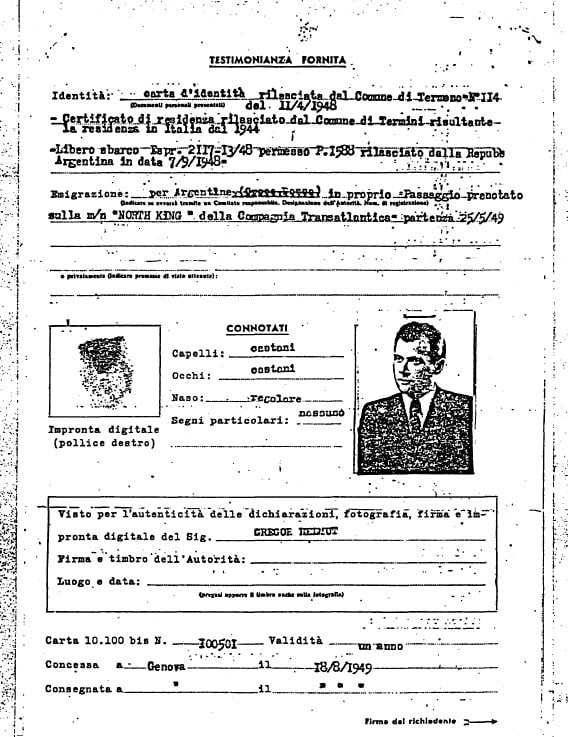
After Germany's surrender in 1945, Mengele evaded capture and began a long flight out of Europe. Like other members of the Third Reich apparatus, he benefited from clandestine networks that helped him leave, first for Italy and then for South America.
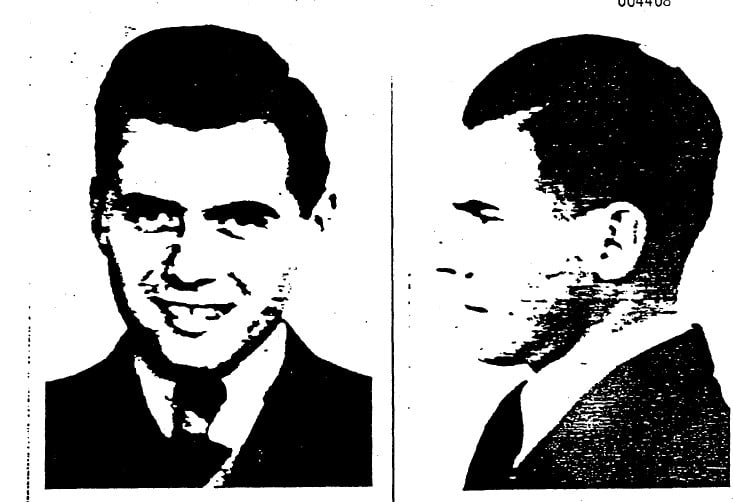
He lived in Argentina, Paraguay and Brazil under various false identities and cover documents that allowed him to blend partly into German expatriate communities. He avoided any public exposure and lived in constant fear of being identified. Even so, he never fully broke with his past: from his hiding places he kept up correspondence with relatives and old acquaintances. That apparently everyday activity eventually created a documentary trail of enormous importance to investigators.
Meanwhile, organisations dedicated to pursuing Nazi criminals, such as the one founded by Simon Wiesenthal, never gave up. Mengele was one of their top targets, because of the gravity of his crimes and his prolonged impunity.
Handwritten documents and correspondence
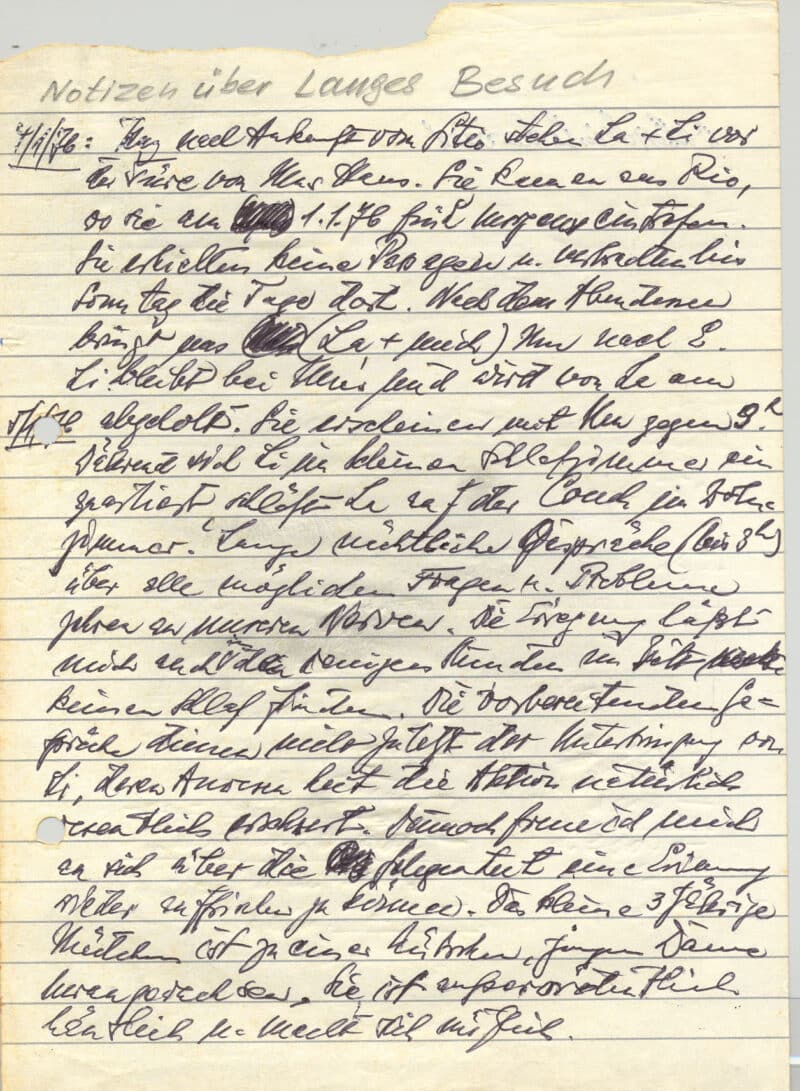
During his flight, Mengele had to deal with many people and maintain lines of communication, even under false identities: letters to relatives, old contacts and other former members of the regime. Every letter was a risk, but also a personal and logistical necessity. For investigators, that correspondence would become a first-rate documentary source.
One of those letters, provided in digital form for this article by the researcher and journalist Betina Anton, is a representative example of the material studied. Letters and other documents signed by Mengele made it possible to compare them with his pre-war writing and to advance the investigation with a technical, documented approach.
Documentary verification after his death
Justice came too late. Mengele died in 1979, drowning after suffering a stroke while swimming at Bertioga (Brazil), and was buried under the false identity of Wolfgang Gerhard, the name he had used in his final years.
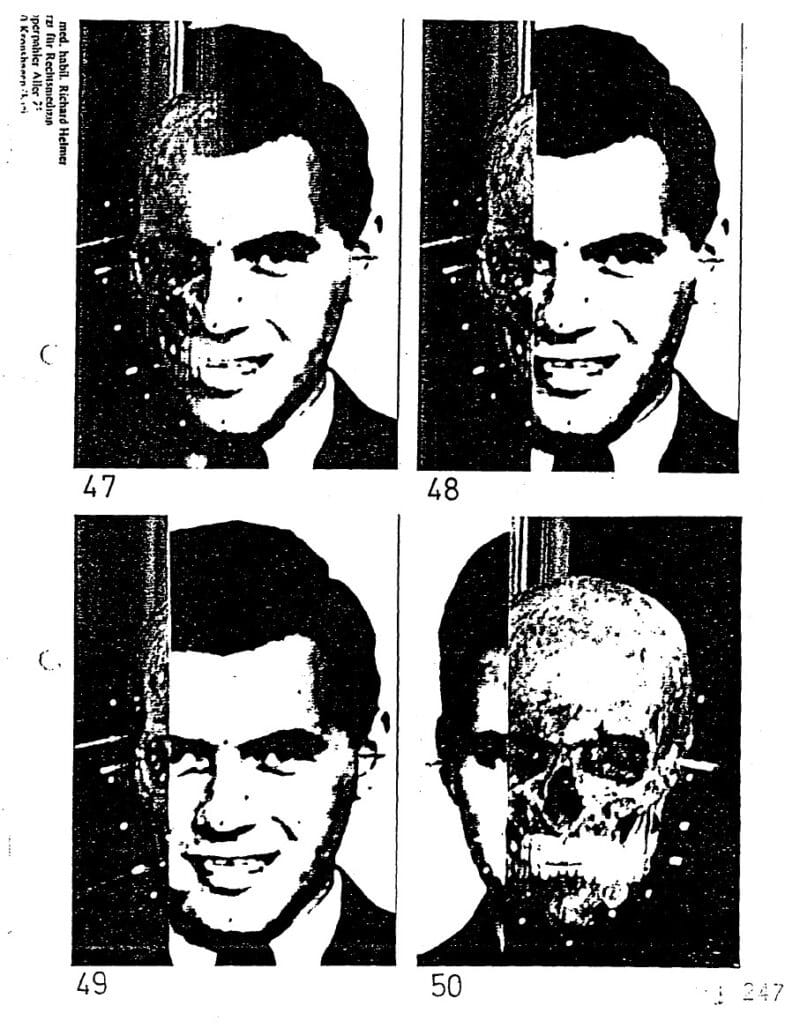
His death did not close the case. In 1985 the grave bearing that identity was located, and an international investigation was launched involving experts from different disciplines and countries, to confirm whether the remains were Mengele's. The report In the Matter of Josef Mengele, prepared by the Office of Special Investigations (OSI) of the Criminal Division of the US Department of Justice and published in 1992, sets out the investigation and its conclusions, based on anthropological, odontological, forensic and documentary evidence.
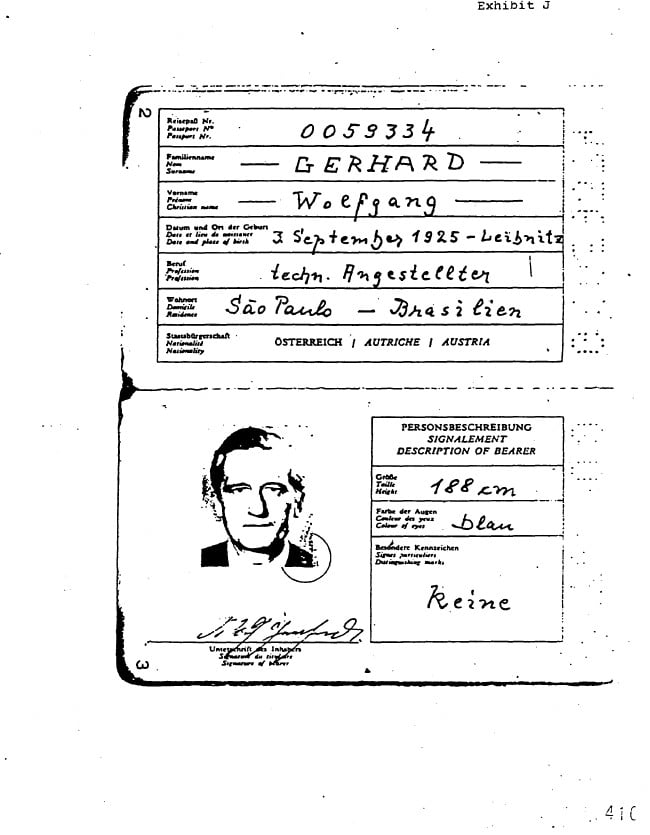
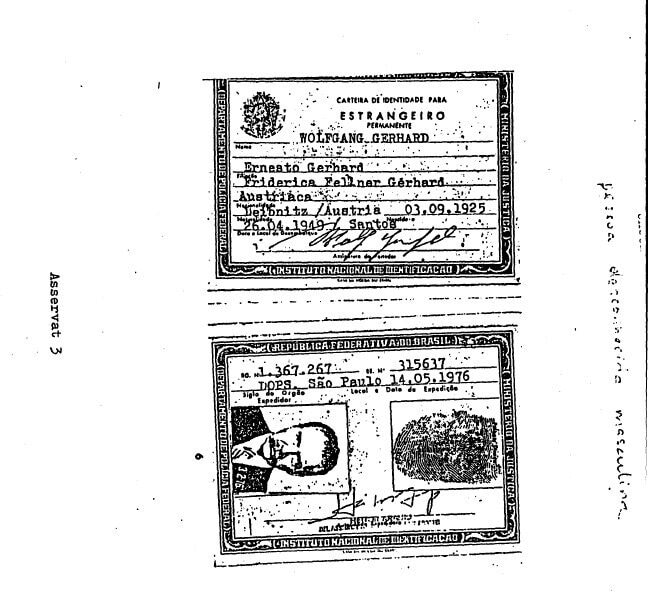
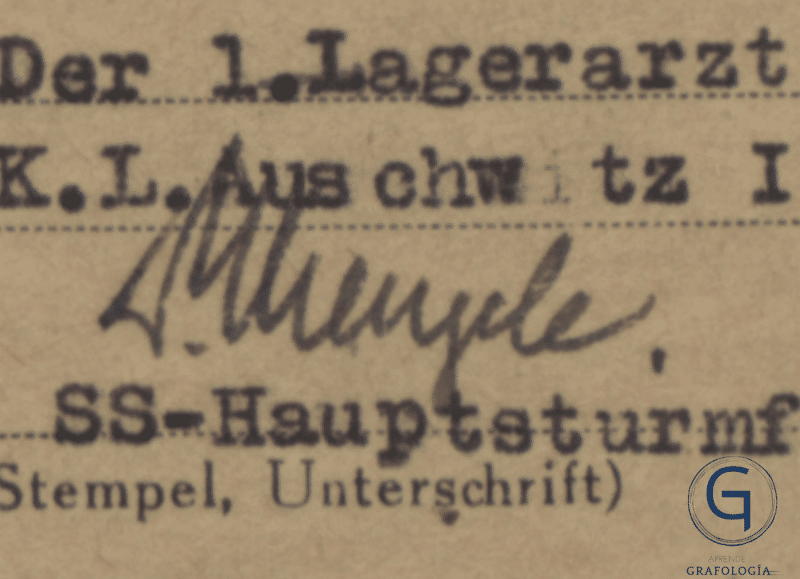
That evidence included an examination of the handwriting: the correspondence sent from South America and the documents in the name of Wolfgang Gerhard were compared with authentic writings by Mengele, such as those in his SS file. Forensic document examiners took part in the study of the documents, among them the American Gideon Epstein, known for his work on the Mengele investigation.
This kind of comparison rests on a central principle of forensic handwriting examination: handwriting retains stable personal features (proportions, connections, pressure, rhythm) that are very hard to change consciously over long periods, even when someone changes their name and country.
What the case shows about historical handwriting examination
The Mengele case shows that forensic handwriting examination is not a secondary discipline but a valuable technical tool when applied with professional judgement. Handwriting withstands the passage of time, changes of identity and deliberate attempts at concealment.
It also highlights the importance of examiners who can analyse historical documents with method, contextual knowledge and experience. Handwriting examination does not replace other evidence, but it complements and strengthens it, especially when authenticating documents, confirming identities or ruling out tampering. The same principles apply today in forensic handwriting examination and in the authentication of historical documents.
Conclusions
The investigation into Josef Mengele shows that documentary truth can take decades to emerge and that, when it does, it must be backed by solid evidence. Handwriting analysis was part of that process, alongside the medical and forensic evidence, and is a reminder that handwriting remains a personal trace of great evidential value.
Disclaimer
This article is intended solely for historical, documentary and professional purposes. It has no ideological affinity whatsoever and is limited to setting out facts, documents and forensic methods applied in a historical investigation of international significance.
Frequently asked questions
Who prepared the report "In the Matter of Josef Mengele"?
The Office of Special Investigations (OSI) of the Criminal Division of the US Department of Justice, which published it in 1992.
Under what name was Mengele buried?
Under the false identity of Wolfgang Gerhard, in Embu das Artes (Brazil).
What is the difference between forensic handwriting examination and graphology?
Forensic handwriting examination compares handwriting to establish authorship or authenticity; graphology interprets handwriting as an expression of personality. They are different approaches.
Would you like to certify a signature?
Do you have a historical document with a signature you would like to authenticate? I'll tell you what it costs and, in the preliminary assessment (€25, deductible from the certificate), what can be concluded.

Juan García Nicolás · Graphologist and forensic handwriting examiner
Trained at Ipsigrap, he personally signs every VS Certificate. Service in English and Spanish. More about me